A Complete Safety Guide to Lithium Iron Phosphate Batteries
As lithium batteries become more common in RVs, marine systems, solar storage, and portable power applications, safety has become one of the most frequently asked questions. Among all lithium technologies, LiFePO4 (Lithium Iron Phosphate) batteries are widely recognized as one of the safest options available.
But are LiFePO4 batteries truly safe?
The short answer is yes—and in this article, we’ll explain exactly why.
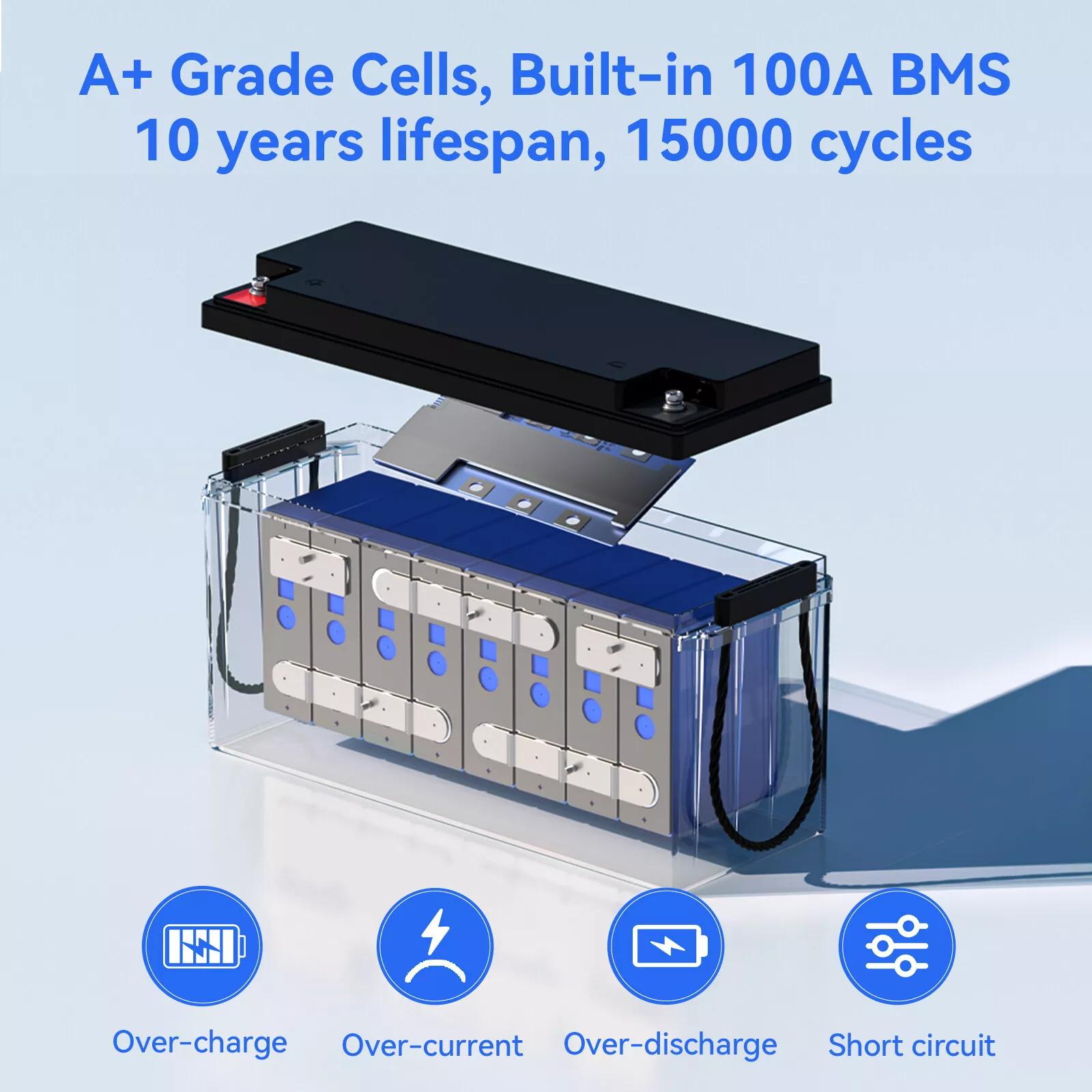
A LiFePO4 battery uses lithium iron phosphate as its cathode material. This chemistry is fundamentally different from traditional lithium-ion batteries (such as NMC or NCA), and that difference is the key to its safety advantages.
LiFePO4 batteries are commonly used in:
RV and camper power systems
Marine and trolling motor batteries
Solar and off-grid energy storage
Backup power and industrial applications
One of the biggest safety risks with lithium batteries is thermal runaway—a chain reaction that can lead to fire or explosion.
LiFePO4 chemistry is inherently stable:
The iron-phosphate bond is very strong
The battery does not release oxygen when overheated
Much higher thermal runaway threshold compared to other lithium chemistries
This makes LiFePO4 batteries far less likely to catch fire, even under extreme conditions.
Unlike some lithium-ion batteries, LiFePO4 batteries:
Do not swell easily
Do not explode when punctured or overcharged (with proper protection)
Maintain structural integrity under stress
This is why LiFePO4 batteries are widely used in enclosed spaces such as RV cabins, boats, and indoor energy storage systems.
A high-quality LiFePO4 battery always includes an intelligent BMS, which acts as the battery’s safety brain.
The BMS provides protection against:
Overcharging
Over-discharging
Overcurrent
Short circuits
High and low temperatures
At HHS Energy, every LiFePO4 battery is equipped with a rigorously tested BMS to ensure safe and stable operation in real-world environments.
LiFePO4 batteries operate efficiently across a wide temperature range and generate less heat during charging and discharging. Reduced internal heat means:
Less stress on battery components
Longer service life
Higher overall safety
LiFePO4 batteries:
Contain no cobalt
Contain no lead
Are more environmentally friendly
This not only improves sustainability but also reduces risks during transportation, storage, and disposal.
| Safety Factor | Lead-Acid Battery | LiFePO4 Battery |
|---|---|---|
| Gas Emission | Yes (hydrogen) | No |
| Acid Leakage | Possible | None |
| Fire Risk | Moderate | Very low |
| Maintenance | Required | Maintenance-free |
| Indoor Use | Limited | Safe |
LiFePO4 batteries eliminate many of the traditional safety hazards associated with lead-acid batteries.
Compared with NMC or NCA lithium-ion batteries commonly used in consumer electronics, LiFePO4 batteries are:
More chemically stable
Less energy-dense but far safer
Better suited for deep cycle and stationary applications
This is why LiFePO4 is the preferred choice for RV, marine, solar, and energy storage systems.
Yes—LiFePO4 batteries are ideal for RV and marine environments.
Safe for enclosed spaces
No off-gassing
Resistant to vibration and movement
Stable under long-term deep cycling
HHS Energy designs LiFePO4 batteries specifically for mobile and marine-grade applications, ensuring long-term reliability even in harsh conditions.
Not true. LiFePO4 is fundamentally different from other lithium chemistries.
High-quality LiFePO4 batteries with proper BMS protection have an extremely low failure rate.
LiFePO4 batteries perform well in high temperatures when designed correctly.
To ensure the safest operation:
Use a charger designed for LiFePO4 batteries
Avoid extreme overcharging or deep over-discharging
Choose batteries with high-quality cells and BMS
Buy from reputable manufacturers like HHS Energy
Proper system design and quality components make a significant difference.
HHS Energy focuses on safety at every level of battery design:
Grade A LiFePO4 cells only
Multi-layer BMS protection
In-house battery testing laboratory
Strict quality control and aging tests
Compliance with international safety standards
Safety is not an option—it’s a foundation.
Yes. LiFePO4 batteries are among the safest energy storage solutions available today.
Their stable chemistry, intelligent BMS protection, long lifespan, and resistance to thermal runaway make them an excellent choice for RVs, marine systems, solar storage, and beyond.
When sourced from a professional manufacturer like HHS Energy, LiFePO4 batteries offer peace of mind, long-term reliability, and superior safety.