Complete Maintenance Guide for Long-Lasting Performance – By HHS Energy
As electric vehicles, RVs, golf carts, marine vessels, and specialty utility vehicles increasingly adopt LiFePO4 vehicle batteries, proper maintenance becomes essential for maximizing lifespan, safety, and performance.
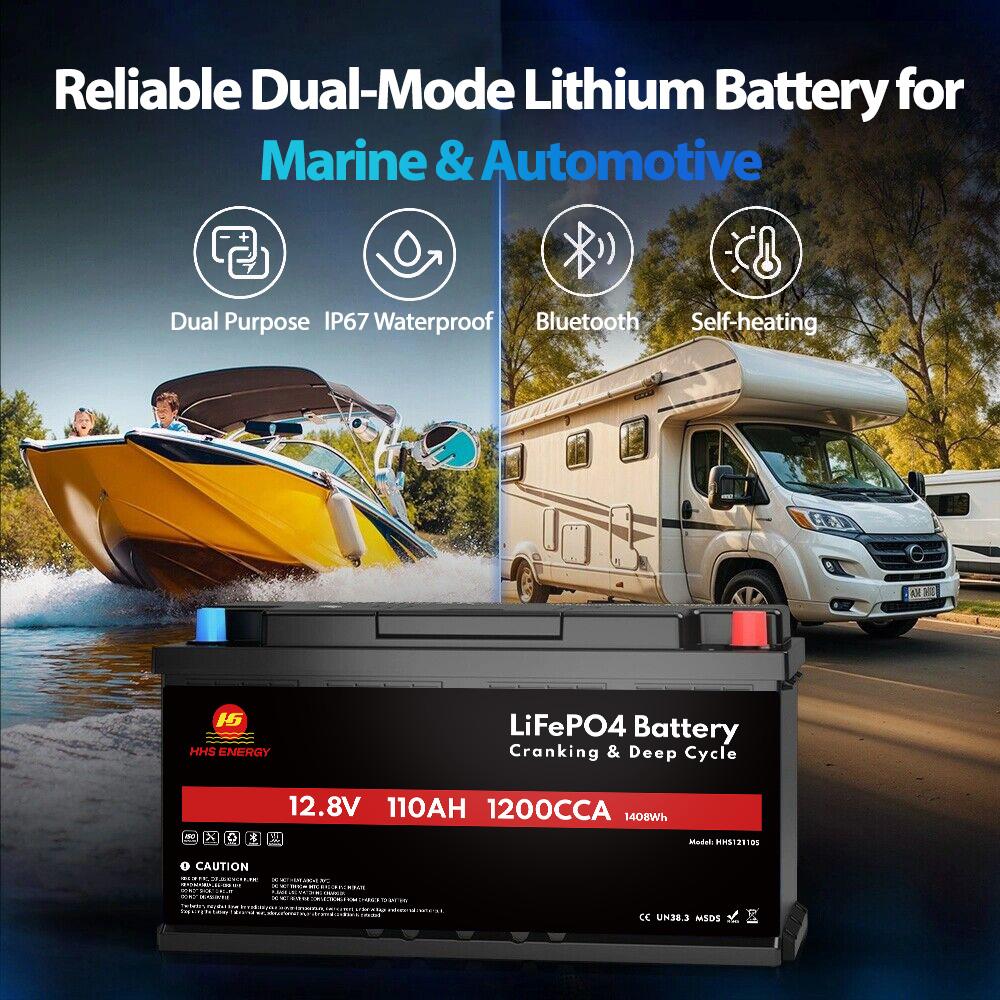
The good news? Compared to traditional lead-acid batteries, LiFePO4 batteries require far less maintenance. However, “low maintenance” does not mean “no maintenance.” Understanding how to properly care for your LiFePO4 vehicle battery ensures you get the full benefits of lithium iron phosphate technology.
In this comprehensive guide, we’ll cover:
Why LiFePO4 batteries need different maintenance than lead-acid
Daily, monthly, and long-term care recommendations
Charging best practices
Storage guidelines
Common mistakes to avoid
Professional insights from HHS Energy
Before discussing maintenance, it's important to understand why LiFePO4 batteries are superior in vehicle applications.
Compared to traditional lead-acid batteries, LiFePO4 offers:
No acid leakage
No water refilling
No sulfation issues
Stable voltage output
Longer cycle life (3000–5000+ cycles)
Lightweight design
Because of these advantages, LiFePO4 vehicle batteries are widely used in:
Electric vehicles (low-speed EVs)
Golf carts
RV house systems
Marine vessels
Utility and industrial vehicles
At HHS Energy, LiFePO4 batteries are engineered specifically for vehicle environments where vibration, temperature fluctuation, and deep cycling are common.
Although LiFePO4 batteries require minimal upkeep, daily awareness improves longevity.
LiFePO4 batteries can handle deep discharge, but frequent 100% discharge may reduce long-term lifespan.
Best practice:
Keep battery charge between 20%–90% for daily use
Avoid running the battery completely empty regularly
Modern LiFePO4 batteries include a Battery Management System (BMS) that protects against:
Overcharge
Over-discharge
Overcurrent
Short circuits
High/low temperature
However, users should still periodically check:
Battery voltage
System load
Charging status
A battery monitor or display panel is recommended for vehicle systems.
Charging is the most important factor in vehicle battery maintenance.
Never use a charger designed solely for lead-acid batteries. Lithium batteries require specific voltage settings.
Typical LiFePO4 charging profile:
Bulk/Absorption voltage: around 14.2V–14.6V (for 12V systems)
No float charge required (or minimal float)
Using improper charging equipment may reduce battery lifespan.
A quality BMS will prevent overcharging, but continuous high-voltage float charging is unnecessary and should be avoided.
For vehicle systems:
Disconnect charger after full charge when possible
Use smart chargers with automatic shut-off
LiFePO4 batteries should not be charged below 0°C (32°F) unless they include low-temperature charging protection.
If operating in cold climates:
Choose batteries with built-in low-temp cut-off
Pre-warm battery before charging
Store vehicle indoors when possible
HHS Energy offers advanced BMS options with temperature protection for enhanced safety.
Although LiFePO4 batteries do not leak acid, periodic inspection is still recommended.
Loose terminals
Corrosion on connectors
Physical damage to casing
Vibration-related mounting issues
Use a dry cloth to wipe dust
Ensure terminals are tight
Avoid water exposure to connectors
Proper mounting reduces vibration stress, especially in off-road or marine vehicles.
If your vehicle will not be used for an extended period (e.g., winter storage), follow these steps:
Ideal storage state of charge:
40%–60%
Avoid storing fully discharged or fully charged for long periods.
Turn off main power switch
Disconnect load if possible
Prevent parasitic drain
Ideal storage temperature:
10°C–25°C (50°F–77°F)
Extreme heat accelerates aging, while freezing temperatures may reduce performance.
Every 3–6 months:
Check battery voltage
Recharge if necessary to maintain 40%–60% level
LiFePO4 batteries have very low self-discharge, making them ideal for seasonal vehicles.
Using a lead-acid charger
Storing the battery fully depleted
Charging below freezing without protection
Ignoring loose wiring
Exposing battery to extreme heat
Using incompatible alternators without DC-DC control
Avoiding these mistakes significantly extends battery life.
With proper maintenance:
8–10 years of service life is common
3000–5000+ charge cycles
Significantly longer lifespan than lead-acid batteries
For vehicles used daily (such as golf carts or utility vehicles), this results in substantial long-term cost savings.
| Feature | Lead-Acid | LiFePO4 |
|---|---|---|
| Water Refill | Required | No |
| Sulfation Risk | Yes | No |
| Maintenance Frequency | High | Low |
| Cycle Life | 300–500 | 3000–5000+ |
| Storage Care | Complex | Simple |
LiFePO4 batteries dramatically simplify vehicle power maintenance.
At HHS Energy, vehicle battery reliability is a design priority.
Our advantages include:
Premium Grade A LiFePO4 cells
Advanced intelligent BMS
Vibration-resistant design
High discharge performance
Strict quality control and aging tests
Custom OEM/ODM solutions
We engineer batteries specifically for demanding vehicle applications, ensuring long-term durability and safety.
LiFePO4 vehicle battery maintenance is simple, but smart care ensures maximum lifespan and performance.
By following proper charging practices, monitoring voltage, storing correctly, and using compatible equipment, you can enjoy years of reliable service from your lithium battery.
Compared to traditional batteries, LiFePO4 technology offers:
Lower maintenance
Greater safety
Longer lifespan
Higher efficiency
With high-quality manufacturing and intelligent protection systems, HHS Energy LiFePO4 vehicle batteries deliver dependable power for modern vehicles in all environments.